The Rajgundha trek is one of those rare Himalayan walks that feels remote without asking too much of you. It starts right at the Billing paragliding take-off point, climbs through pine forest and open meadow, and drops you into a quiet shepherd village that still runs on its own slow clock. If you’re already coming to Bir for the flying and the cafés, the Rajgundha trek is the easiest way to see the wilder side of this region in a single day or weekend.
This 2026 guide walks you through the full route, the real distance and difficulty, what it costs, the best season to go, and where to stay so you start and finish the trek rested.
What Makes the Rajgundha Trek Worth It
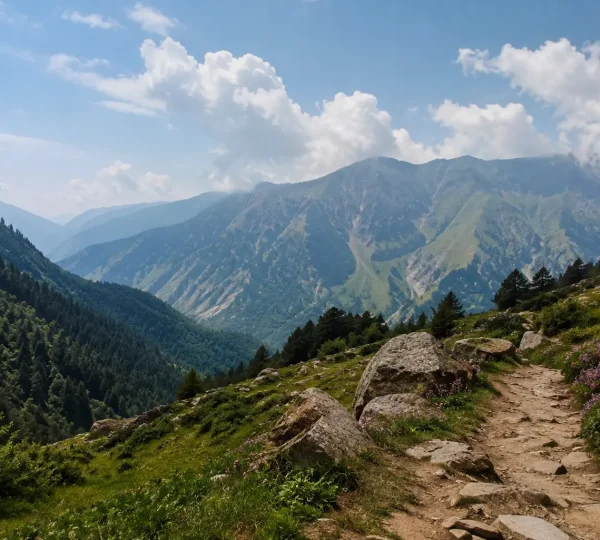
Rajgundha sits in the Chota Bhangal region of Kangra district, tucked behind the Dhauladhar range at roughly 2,700 metres. People who live in the city often call it “Chota Manali,” but that undersells it. There are no crowds, no big resorts, and the loudest thing you’ll hear is the Uhl river and the wind.
The trek is also genuinely beginner-friendly, which is unusual for a walk that ends in scenery this dramatic. You get high-altitude views without needing technical skill or weeks of training. For most travellers, that combination of low effort and big payoff is exactly why the Rajgundha trek has quietly become one of the most popular things to do in the area.
If you’re still deciding how to fill your days, our guide to the 10 best things to do in Bir Billing pairs nicely with this trek.
Rajgundha Trek Route from Billing
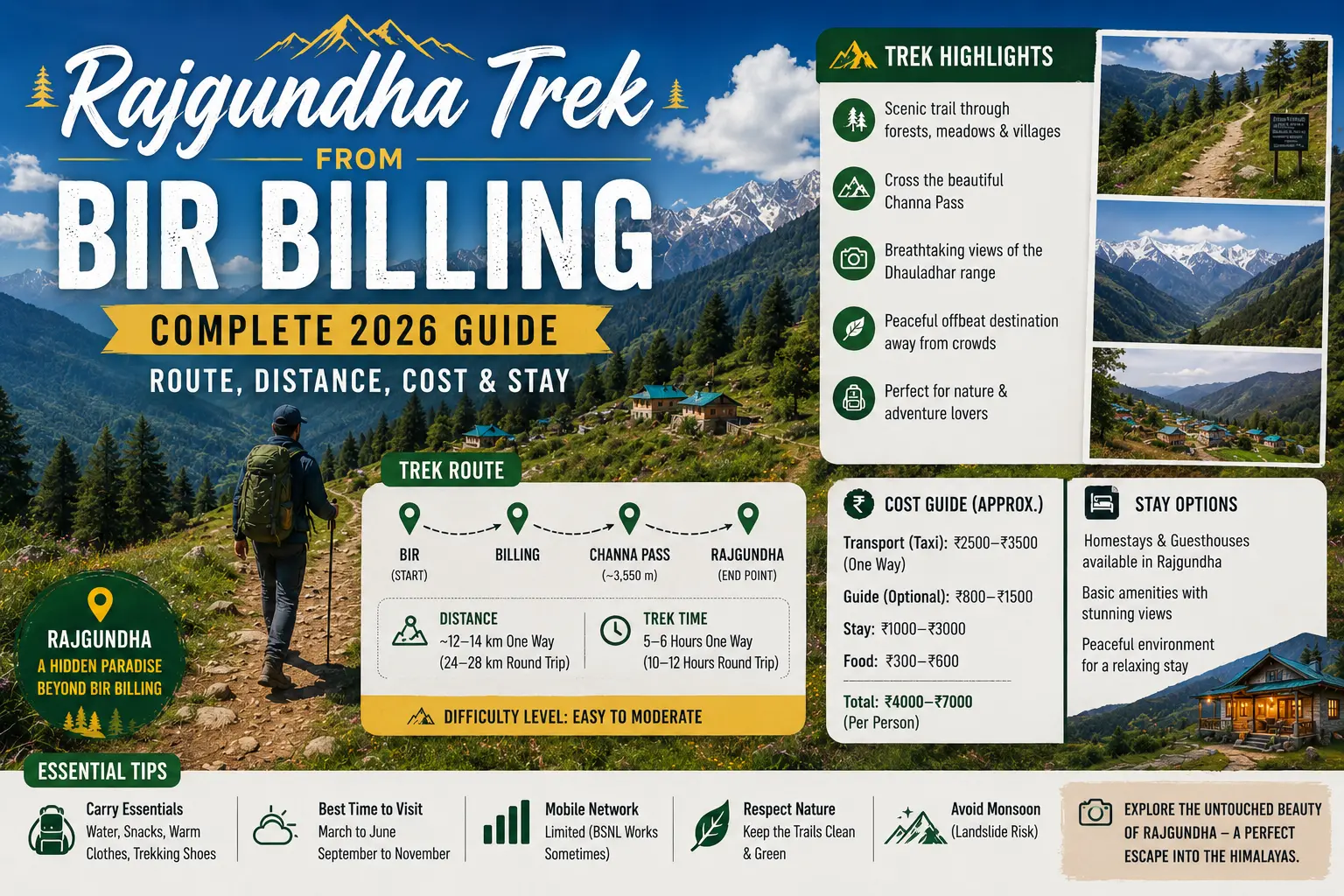
The classic Rajgundha trek route starts at Billing, the same take-off site used by paragliders. Since Billing is your launch point, the first leg is a quick taxi ride up from Bir — somewhere around 14–16 km of twisting hill road that eats up about three quarters of an hour.
Once at Billing, the trail leaves from near the second take-off point and heads gradually uphill. After about an hour you reach Channa Pass (often written Channa Ghat), the highest point of the walk. There’s usually a small stall here selling tea and Maggi, which is a welcome excuse to catch your breath and take in the view.
From Channa Pass the trail tips over into the next valley and becomes a gentle, mostly downhill walk toward Rajgundha. You’ll cross meadows, a few seasonal streams, and stretches of deodar forest before the village comes into view. Plan for a relaxed pace — this is a walk to enjoy, not race.
The Road Route via Barot Valley
Not everyone wants to walk both ways, and you don’t have to. Rajgundha is now connected by a narrow road from the Barot side, so you can do a scenic loop: trek in from Billing one day and drive out via Badagran and Barot the next, or vice versa. The road is rough and partly off-road near the end, so a sturdy vehicle and a local driver are non-negotiable. This loop is a great option if you’re travelling with family or anyone who’d rather not do the full Rajgundha trek on foot in both directions.
Rajgundha Trek Distance and Difficulty
Here’s the practical bit most people search for.
- Distance: roughly 12–14 km one way from Billing to Rajgundha
- Time: about 5–6 hours at an easy pace
- Highest point: Channa Pass, then a downhill stretch into the village
- Difficulty: easy to moderate
Most fit travellers handle the Rajgundha trek comfortably as a long day hike. A lot of trekkers, though, stretch it across two days — bedding down in Rajgundha for the night and walking back the next morning. Doing it this way trades one long, draining haul for a genuinely restful weekend.
If you’ve got energy to spare, there’s an optional climb to Hanuman Garh, the highest point of the valley at around 10,500 ft, with all-round views of the Dhauladhar and Chota Bhangal. It’s steeper and adds a few hours, so save it for the second day if you’re camping.
Not sure how to slot this into your schedule? Our breakdown of how many days you need in Bir Billing helps you plan around it.
Pair Your Trip With the Gunehar Waterfall Trek
If you have a spare half-day in the Billing valley, the Gunehar waterfall trek is the perfect short add-on and a complete contrast to the high meadows of Rajgundha. Gunehar village sits about 1.5 km from Bir, and from there it’s a short, leafy walk to a 100-foot cascade hidden in the forest.
The Gunehar waterfall trek distance is only around 1.5–2 km one way from the village, taking roughly 30–45 minutes. The trail is rocky in places and not always well marked, so go with a local or follow other walkers. It’s an easy, rewarding outing — ideal for the day you arrive or the day you leave, when you don’t want to commit to the full Rajgundha trek.
When to Plan Your Rajgundha Trek
Season makes a big difference here.
- March to June: clear skies, green slopes and pleasant daytime temperatures. The most reliable window.
- September to October: crisp post-monsoon air and excellent visibility — arguably the prettiest time.
- July to August (monsoon): lush but risky. Landslides and slippery trails make this the season to skip.
- December to March (winter): heavy snowfall closes most roads and trekking routes to Rajgundha. Avoid unless you’re an experienced winter trekker with a guide.
Even at the height of summer the temperature falls sharply once the sun goes down, so a warm layer belongs in your bag whatever month you pick. For a fuller picture, see our guide to Bir Billing weather across the seasons.
Rajgundha Trek Cost: What to Budget
The Rajgundha trek is one of the more affordable Himalayan experiences, especially if you keep it simple. These are approximate 2026 figures — always confirm locally.
- Self-guided day trek: essentially free, apart from the taxi from Bir to Billing (around ₹600–₹800 one way) and food along the way.
- Guided two-day trek with camping: typically ₹2,500–₹4,500 per person, usually including a guide, transport between Bir and Billing, tent, sleeping bag, dinner and breakfast.
- Homestay in Rajgundha: roughly ₹800–₹1,500 per night, often with home-cooked meals.
- Meals on the trail: budget a few hundred rupees for tea, Maggi and snacks.
A guide isn’t strictly required, but for first-timers it’s worth the small cost — local knowledge keeps you on the right trail and adds context to the villages you pass.
What to Pack for the Rajgundha Trek
Keep it light but don’t cut corners on the essentials:
- Proper trekking or sturdy sports shoes with grip
- A warm layer and a light rain shell, even in summer
- At least 1.5–2 litres of water and some snacks
- Sunscreen, a cap and sunglasses
- A power bank — phone signal is patchy, so don’t rely on Google Maps
- A small first-aid kit and any personal medication
There are no shops on the higher sections of the trail, so carry what you’ll need.
Where to Stay Before and After Your Rajgundha Trek
This is the part that quietly makes or breaks the trip. The Rajgundha trek is far more enjoyable when you arrive well-rested and have a comfortable bed waiting on the way back — sore legs and a hot shower are a great combination.
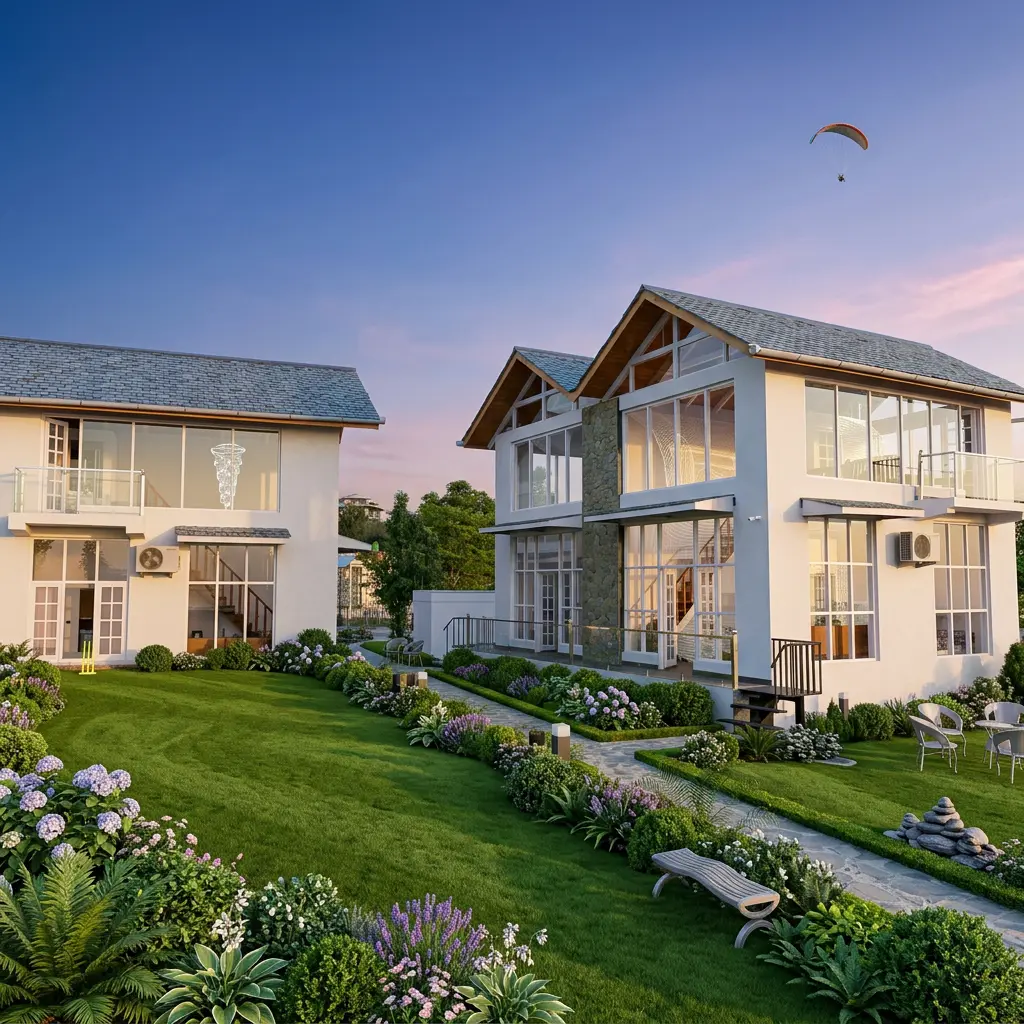
Staying in Bir is the smart base. It puts you close to the Billing road for an early start, near the cafés for your pre-trek breakfast, and gives you somewhere genuinely relaxing to recover afterward. A private luxury villa in Bir Billing is an ideal choice, especially for couples, families, or groups who want privacy, stunning mountain views, and premium comfort instead of a basic guesthouse. You can also check out the villa’s Instagram to explore real photos, videos, and guest experiences before booking.
Plan your start point by reading how to reach Bir Billing from Delhi, Chandigarh and Dharamshala before you book.
Other Treks Around Bir Worth Exploring
The Rajgundha trek is a brilliant introduction, but it’s far from the only walk here. There are several other beautiful treks around Bir if you want to extend your trip in the Billing valley:
- Gunehar waterfall trek — the short forest walk covered above, perfect for a relaxed day.
- Billing to Barot circuit — a longer route that links Rajgundha with the Barot valley and the Uhl river.
- Bangoru waterfall trail — a quieter cascade reached from Gunehar village.
Between the meadows of Rajgundha, the waterfalls, and the wide-open Billing valley, you could easily fill three or four days without ever repeating a trail. Refuel afterward at one of the best cafés in Bir Billing — you’ll have earned it.
FAQs About the Rajgundha Trek
Is the Rajgundha Trek Worth Visiting?
Absolutely. Rajgundha is known for its beautiful landscapes, open meadows, dense forests, and traditional Himalayan village charm. Unlike many crowded trekking destinations, it offers a peaceful environment where visitors can enjoy nature without large tourist crowds.
How Challenging Is the Rajgundha Trek?
The trek is usually rated as easy to moderately difficult. It is suitable for people with average fitness levels, as the route mainly consists of gradual climbs, forested paths, and open grasslands rather than steep or technical sections.
What Is the Trekking Distance to Rajgundha?
The total distance depends on the route you choose. The most commonly used trail from Billing through Channa Pass to Rajgundha covers roughly 12–14 kilometers in one direction.
How Much Time Does the Rajgundha Trek Require?
On average, hikers take around 4 to 6 hours to reach Rajgundha from Billing. Travel time may vary depending on individual pace, weather conditions, and the number of rest stops along the way.
When Is the Best Time to Visit Rajgundha?
The most pleasant months for visiting Rajgundha are March to June and September to November. During these periods, the weather is generally comfortable, and the mountain views are often at their best.
Is It Safe to Visit Rajgundha During the Monsoon?
Visiting during the monsoon is possible, but trekkers should expect slippery paths, occasional rainfall, and reduced visibility. Carrying waterproof clothing and suitable footwear is strongly recommended.
Does Rajgundha Experience Snowfall?
Yes, snowfall is common during the winter season. Snow can usually be seen between December and February, although the amount varies each year depending on weather patterns.
Can I Reach Rajgundha by Car?
Rajgundha can be approached by road from the Barot side. Since some sections of the road are uneven and challenging, vehicles with higher ground clearance, such as SUVs, are generally the preferred choice.
Are Accommodation Options Available in Rajgundha?
Yes, visitors can find homestays and small guesthouses in the village. Staying with local hosts is a great way to experience regional culture and hospitality.
Can I Camp in Rajgundha?
Camping is a popular activity in and around Rajgundha. Visitors should respect local guidelines, choose appropriate camping areas, and ensure they leave no waste behind.
Are ATM Facilities Available in Rajgundha?
ATM access is very limited in Rajgundha. It is best to carry enough cash from nearby towns such as Bir or Baijnath before beginning your journey.
What Should I Carry for the Rajgundha Trek?
Essential items include sturdy trekking shoes, comfortable layered clothing, a waterproof jacket, drinking water, energy snacks, sunscreen, sunglasses, a power bank, basic medicines, and sufficient cash.
What Are the Main Highlights of the Rajgundha Trek?
The Rajgundha trek is known for its scenic meadows, pine forests, mountain viewpoints, and traditional Himalayan villages. Trekkers also enjoy panoramic views of the Dhauladhar range and the peaceful atmosphere away from crowded tourist areas.
How Do I Reach the Starting Point of the Rajgundha Trek?
Most visitors begin the trek from Billing, which is located above Bir in Himachal Pradesh. Billing can be reached by road from Bir, making it a convenient starting point for the trek to Rajgundha.
What Kind of Weather Can I Expect During the Rajgundha Trek?
Weather conditions vary by season. Summers are generally pleasant, while monsoon months bring rain and mist. Autumn offers clear skies and mountain views, whereas winters can be cold with occasional snowfall in higher areas.
Are Food and Drinking Water Available in Rajgundha?
Basic meals, tea, and refreshments are available at local homestays and small eateries in the village. However, carrying your own water bottle and snacks is recommended, especially during the trek.
Can Families and Children Visit Rajgundha?
Yes, Rajgundha is a suitable destination for families looking to enjoy nature and mountain scenery. Children who are comfortable with moderate walking can usually complete the trek with proper planning and supervision.
Ready to plan the trip? Sort your stay first, then your trail. Base yourself comfortably in Bir, knock out the Rajgundha trek, add the Gunehar waterfall trek if you have time, and let the villa handle the rest of the relaxing.